viernes, 28 de septiembre de 2012

Water cycle


Iñaqui Beceiro made this poster about water cycle


Roque, Irene, Marta and Andrea made this poster about water supply system and water treatment in Ferrol

viernes, 8 de junio de 2012

Good news for our Comenius team

This week we have been given some good news, next school year we are going to have a Comenius Assistant here with us. She is a Lithuanian teacher named Vilma. Elena Yáñez one of our English teachers will be her mentor. They were in touch by email and Vilma is very interested in this program. I think she will be a breath of fresh air in our Comenius project. She will arrive in October, but I'm looking forward to knowing her.

sábado, 2 de junio de 2012

Votacion logos

Comenius IESCA logos

Comenius IESCA logos

Votación para elegir los 4 logos que representarán a nuestro instituto en el proyecto Comenius "Water. The spring of life"

01 Logo Comenius (Irene Castro Reguera)

02 Logo Comenius (Marta Castro Romaní)

03 Logo Comenius Esperanza 04 Web

04 Logo Esperanza 2bis

05 Logo Varja 3

06 Logo bescos 1

07 Logo roque 2

08 Logo roque 3

sábado, 5 de mayo de 2012

Next week in Sicily

Next Wednesday three teachers and six students of our school are going to leave to Augusta. We are going to spend three days with all our Comenius friends. We are looking forward to leaving. See you in Augusta.

miércoles, 25 de abril de 2012

Microorganisms in the water


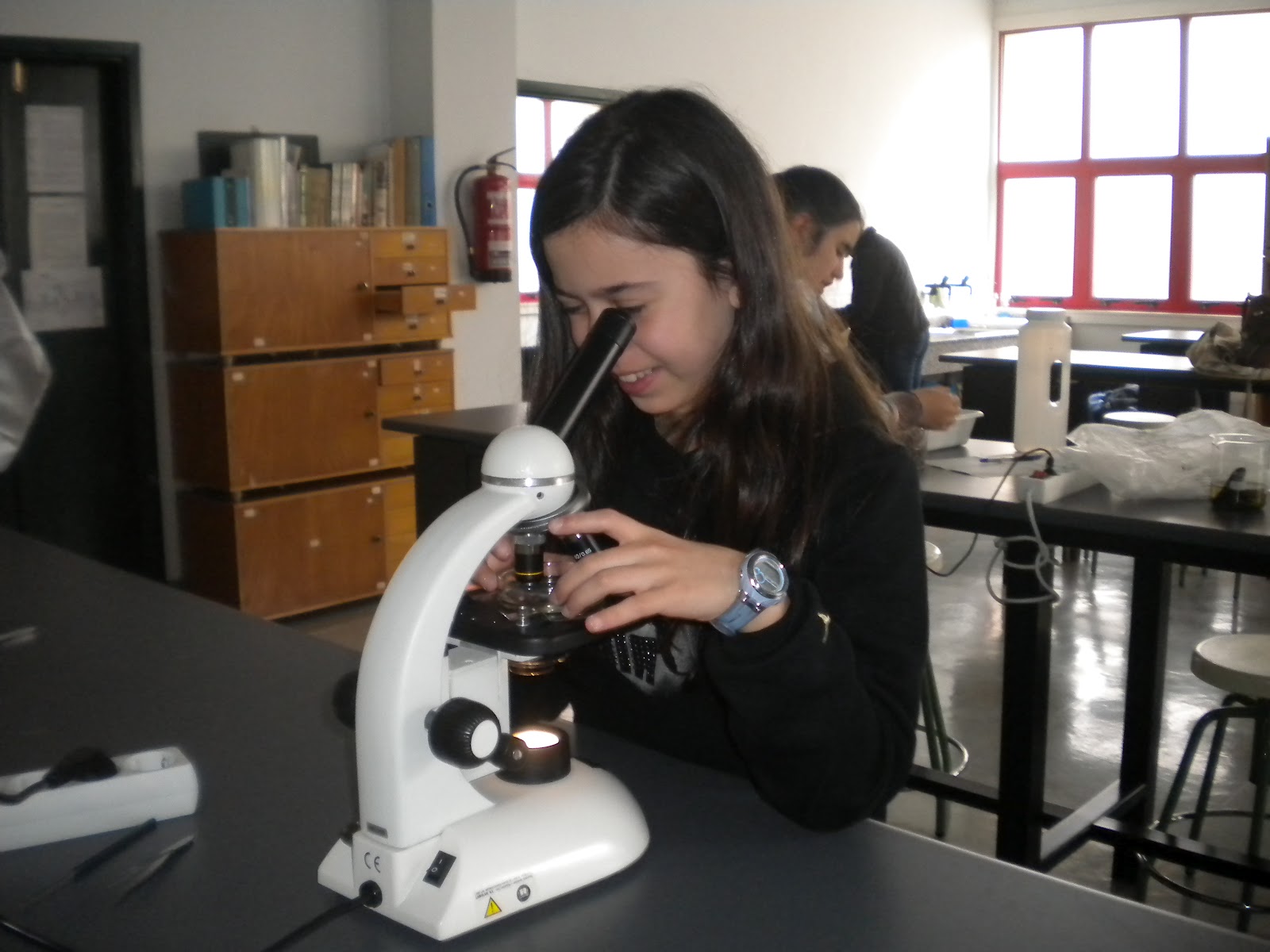
Last friday,  students 1º ESO, Roque, Marta, Iñaqui, Andrea and Irene collected a sample of water in a puddle  of rainwater from the school courtyard and they  let it  with some  leaves in descomposition in the laboratory for several days .

 They wanted to see the microrganisms in the water. This afternoon, they could see some microorganisms under the microscopy like some species of ciliates and flagellates.

martes, 24 de abril de 2012

Study of intertidal zone

Today a group of students  accompanied by teachers Andres Lamas Seco and Mª José Leira went to the Covas beach to do a study of the life in the intertidal zone. The aim of it is to complete the work they  are doing about the life around water.
  In addition, students of ESO 1º  brought  water and algae samples  to  study  them in the laboratory.


This output was proposed on April 13, but due to bad weather we could not go until this morning. In the afternoon went back  a storm and winds of 100 km per hour. We were lucky to go this morning. The latest storm left stranded several animals. We found this issue of dolphin (Grampus griseus)


Students 
Sergio Avila Testa
Iñaki Beceiro Cillero
Roque  Bescos Beceiro
Paloma Bescos Santos
Cristina Casal Carrodeguas
Noa  Castro Lema
Lara Castro Lema
Irene Castro Castro Regueira
Marta Castro Romaní
Carlota Davila Lopez
Tania Gándara Mosquera
María García Díaz
Andrea García García Gabiola
Lidia Lareo Vilela
Andrea Perez Perez
Eva Rodriguez Vilariño
Esperanza Vázquez Dopico
Andrea Vieites Estraviz

jueves, 12 de abril de 2012

How I can summarize this experience?

Entering for this proyect has been a the best thing that i have dine in my live.

I could meet incredible people of other countries, a lot of things about their culture. We shared laugh, plays and cries when they went away.
I can say that these days been the best for me. I have got new friends in Estonia, Turkey, France and Italy. I would like to stay in the same place with them forever.

I can tell you that i fell i have a new sister.

I miss you all and i hope we will meet some day.

See you in Sicily.

Written by Andrea Pérez Pérez 1º G

domingo, 25 de marzo de 2012


Roque, Marta Irene and Iñaqui visited the exhibition on water and prepared a questionnaire about it.

Thanks, Comenius!!!!


When I started participating in the Comenius project could not imagine that I would live experience would be as enriching and rewarding for my colleagues, my family and especially for me.

All work prepared, the activities we enjoyed , first in high school and later with the foreign students provided me knowledge, experience and, above all, shared experiences that I can never forget.

Those were intense days, full of wonderful memories that will become part of my student life.

All this would not be possible without the work of teachers who were involved with much enthusiasm and effort that everything would go well.

I know I have new friends in Italy, Estonia, France and Turkey. This I have to thank the Comenius project that brought us closer to all of us involved in it.


Esperanza Vázquez Dopico 1ºG Bach

jueves, 22 de marzo de 2012

Geography of Galicia and its bodies of water

Presentation given at the meeting in Spain by Sergio Ávila Testa, Andrea Vieites Estraviz; Esperanza Vázquez Dopico, Andrea Pérez Pérez and Ana Isabel López Durán of 1 º G

martes, 20 de marzo de 2012

domingo, 18 de marzo de 2012

Our meeting was over

Everything was perfect! These few words can sum up the last days. The Spanish students and their families, great, the best of the meeting. The foreign students super too. From Florian "le petit" to Neslihan. She was a little bit ill but she always appeared happy.
And the teachers, what about them? All the foreign teachers are very very friendly. I think we have a new friends in Estonia, France, Italy and Turkey.
Today, Sunday 18th of March we think that the meeting was a fabulous experience for our school and we are looking forward to seeing all of them again in Sicily in May.

miércoles, 7 de marzo de 2012

Esperanza, Sergio and Andrea are creating the hidro-geographical presentation. Sergio are translating it to English. They are helped by Meli, María José and Miguel.
Marta, Roque, Irene and Andrea are searching images to the water dictionary. They shared the documents in Google docs.
Everyone is very nervous.

martes, 6 de marzo de 2012

El castillo de la Palma.


En esta fotografía se puede ver el Castillo de la Palma situado en la ría de Ferrol, uno de los paisajes más significativos de nuestra comarca.


Esperanza y Ana 1º "G" Bach

New Logo.


Here, you can see the new logo that Esperanza and Ana have created!!!!

lunes, 6 de febrero de 2012

El agua en el mundo


Trabajo realizado por las alumnas de 1º C Bac Lucía Dopico Tellado, Uxía Cabaleiro Rodriguez, Rosmery Soto Ramos

sábado, 4 de febrero de 2012

Snake Of Belelle´s River


In the City of Fene in Sillobre, particularly at the Black Well of Belelle´s Dam it lived a great winged serpent and covered withbroad scales. The snake slept at a rocked in the cradle of the river,wrapped with sheets of mud and reeds quilt and aquatic weeds. The waters
seemed to sing sweet lullabies.

The snake was very traveller.Their small wings could hardly withstand a large body skimming. With much training effort and the whole area could go to the beach of Cabanas. Some say that the unsatisfied maternal instinct was to take the nine waves, or perhaps nine
bathrooms, because kids never knew him.

Who saw it was terrified. Fear spread through the area andplanned to kill her. They met residents of several villages and decided to make a timber with a sharp stakes, as a sharp spears.
Loans, kneeling with the tips up, in the path of the serpent in the direction of Cabanas, where flying short and even, sometimes alighting to rest. And there was nailed. The cries of slow death of the animal were heard at great distances. The scales all your body's defense had been able to man, insatiable predator.

Now the Belelle´s waters don´t sing,they cry.


Written by Esperanza Piñeiro de San Miguel and Andrés Gómez Blanco, illustrated by J.M. González Collado

Translated by Sergio Avila Testa 1º “G” Bach

viernes, 3 de febrero de 2012

jueves, 2 de febrero de 2012

The monster of Ferrol harbour

THE MONSTER OF FERROL HARBOUR


Who hasn’t known anything about a mysterious tunnel which linked the local park and the Military Arsenal in Ferrol? It’s said that it even reached the fishing port, where a horrible monster lived there. That is one of the big number of fabulous tunnels with treasures, enchanted characters or even fearful beings.

Old fishermen describe the marine monster of Curuxeiras. They say it was a giant red conger eel with seven heads. It filled them with fear because fishing was frightened away by the monster and it also broke nets and rigs. Its strong tail could shake waters and generate huge waves capable of making crafts be wrecked. It lived hidden under the stones in the piers, and it roared through its seven heads during the storming days.

The number seven is a magic number like numbers three or nine. They constantly appear in the Galician traditions. Since antiquity, the number seven is symbolic and holy. In the Babylonian world map, the Heaven and the Earth are divided into seven parts. Seven were the Pleiades, the planets and the Great and the Little Bear stars, the rain winds, the plagues in Egypt and the years of abundance and drought, according to dreams from the seven fat and the seven thin cows. In Old East, with seven good spirits and another seven bad spirits, the tree of life has seven branches showing the total full. The legendary Mesopotamian cities of Uruc and Ecbatana were surrounded by seven walls with the seven rainbow’s colours. The Jewish candelabra has seven branches as well. In different cultures, the deity represents the omnipotence with seven fingers, and the omnipresence with seven eyes. There are seven Wises and seven Olympic gods in Greece. In the Christian tradition, seven are the days of the Creation, the sacraments, the deadly sins and the devils; in the Revelations from St. John there are even seven angels, seven trumpets, seven seals,... and seven are the pains of the Virgin too. Are not seven the wonders of the world or the cinema the seventh art? In the Pre-Romanesque, the juxtaposition of seven figures represented an undefined multitude. The constructive work from Fernán Pérez de Andrade, with seven bridges, seven churches, seven hospitals and seven monasteries was numerous and generous.

All in all, the number seven symbolizes multitude, grandeur, majesty, with maximum power or terror. That’s the reason why monsters are imagined to have seven heads, as the Phoenician snake Lothan; the biblical monster Leviatam, crowned over all of its heads, capable of making the stars fall down by using its tail; or even the terrible monster from the port of Ferrol.

This passage was written by Esperanza Piñeiro de San Miguel and Andrés Gómez Blanco, illustrated by J.M. González Collado, and translated by Ana López Durán (1º “G” Bach).